
How to Check Criminal History in Morgan County
Begin with the event you need to confirm. A filed felony or class A misdemeanor belongs in Utah District Court. Most class B and C misdemeanors, infractions, traffic matters, and county ordinance cases go through Morgan County Justice Court. Utah Courts Xchange holds public summaries from both court levels after staff enter the data in CORIS. A sheriff report, booking file, state rap sheet, and court docket answer different questions, so the first search should match the kind of record sought.
Gather the full name, spelling variants, approximate event date, and any case, citation, incident, or offender number. Date of birth can help separate similar names, but sensitive identifiers may not be public. Then work through the official chain:
- Search Xchange by exact case number when one is known, or use the party name and confirm Morgan as the venue.
- Read each charge and docket event instead of treating a closed case as a conviction.
- Call the Morgan County Sheriff for the incident number or the receiving jail after a recent arrest.
- Request non-online court or agency material from the office that created it.
- Use BCI Right of Access when reviewing your own fingerprint-supported Utah criminal history.
Certified copies come from the court that holds the case. For a recent arrest, the receiving jail controls the booking packet. These steps keep allegations, custody, filed charges, and final outcomes in their proper lanes.
Morgan County Criminal Records Crossroads
Morgan County’s local record route is unusually compact. The county offices, sheriff contact point, and justice court all use 48 West Young Street in Morgan. That does not make one counter the custodian for every file. Court staff maintain judicial records, while the sheriff handles deputy-created reports. The elected county clerk is not the criminal court clerk.
The official Morgan County offices page shows the shared government setting and department routes.
The shared address makes it easy to reach the right building, but a caller should still name the exact record and office. Court contact hours are narrow, and the justice court advises callers to confirm arrangements before a visit.
Morgan County Sheriff
48 W. Young St.
Morgan, UT 84050
801-829-0590
Morgan Justice Court
48 W. Young St.
Morgan, UT 84050
801-845-4021
BCI Records Office
4315 S. 2700 W., Suite 1300
Taylorsville, UT 84129
801-965-4445
Note: The sheriff and county crime-report pages publish two different non-emergency dispatch numbers, so confirm the correct line before relying on either.
Official Utah Background Checks
The Utah Department of Public Safety, Bureau of Criminal Identification is the central state repository. It does not offer the public a name search for Utah rap sheets. Instead, a person may seek their own Utah Criminal History Right of Access with fingerprints, acceptable identification, and the current application. The fee is $20 as of July 1, 2025. BCI warns that a record may omit an event if no qualifying fingerprints reached the repository.
The BCI criminal-records page lists the current self-review route, office details, and fee.
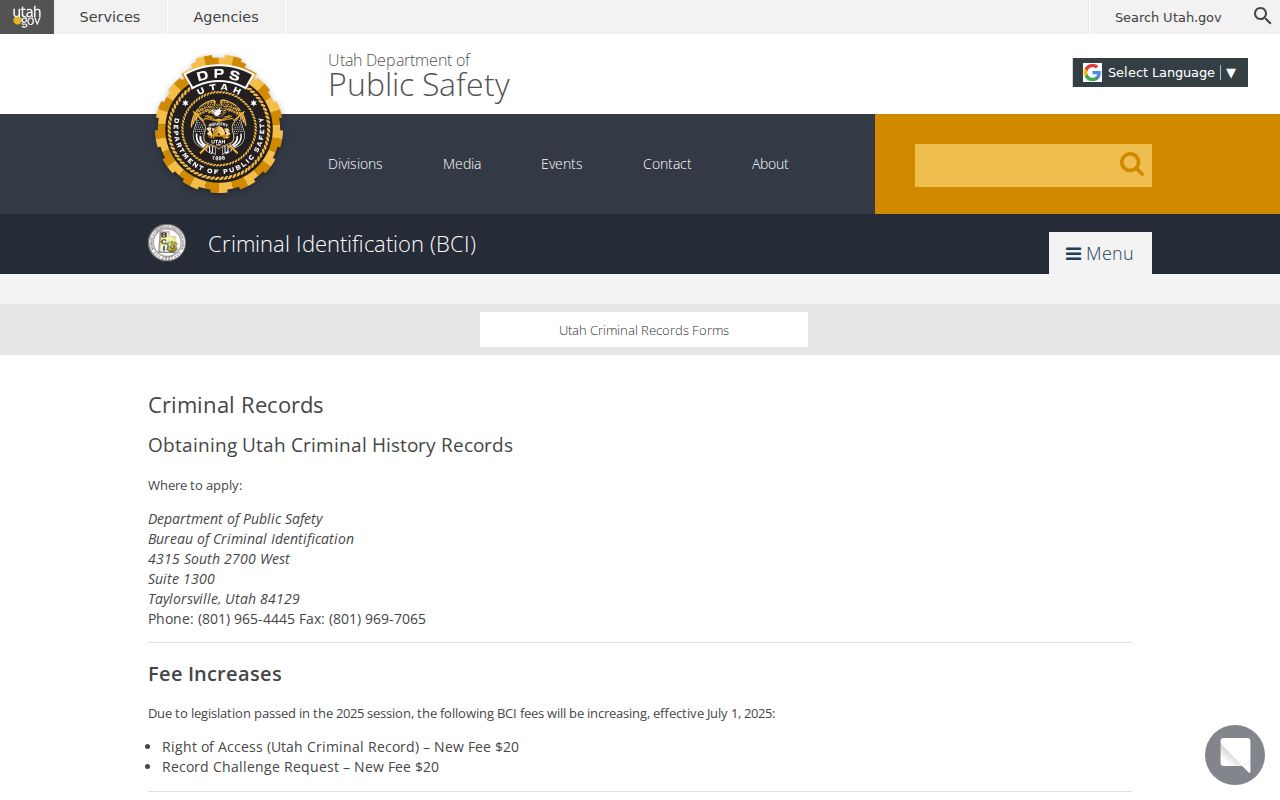
This state record is not the same as an Xchange court search. BCI assembles fingerprint-supported Utah cycles, while Xchange presents public court cases. The FBI Identity History Summary is a separate subject-only federal process. Utah-authorized applicant checks use the fingerprint channel set by the requesting program, and Morgan residents should confirm any local fingerprint service with the sheriff before traveling.
Morgan County Booking Records Leave
Morgan County does not operate a jail. A deputy or trooper can create a Morgan arrest report, yet the booking record will be made by an available receiving facility outside the county. Research found no official standing agreement that names one jail for every arrest. This makes a generic “Morgan County jail roster” an unreliable starting point because no such local roster exists.
Call the arresting agency or dispatch with the full name and approximate arrest time. Ask which facility completed booking, then use that jail’s official roster or information line. Search Xchange later for the filed Morgan case. A recent arrest can happen before the prosecutor files a charge, so a brief gap between custody and the court index is normal.
The Morgan County Sheriff page identifies the county’s local law-enforcement contact.
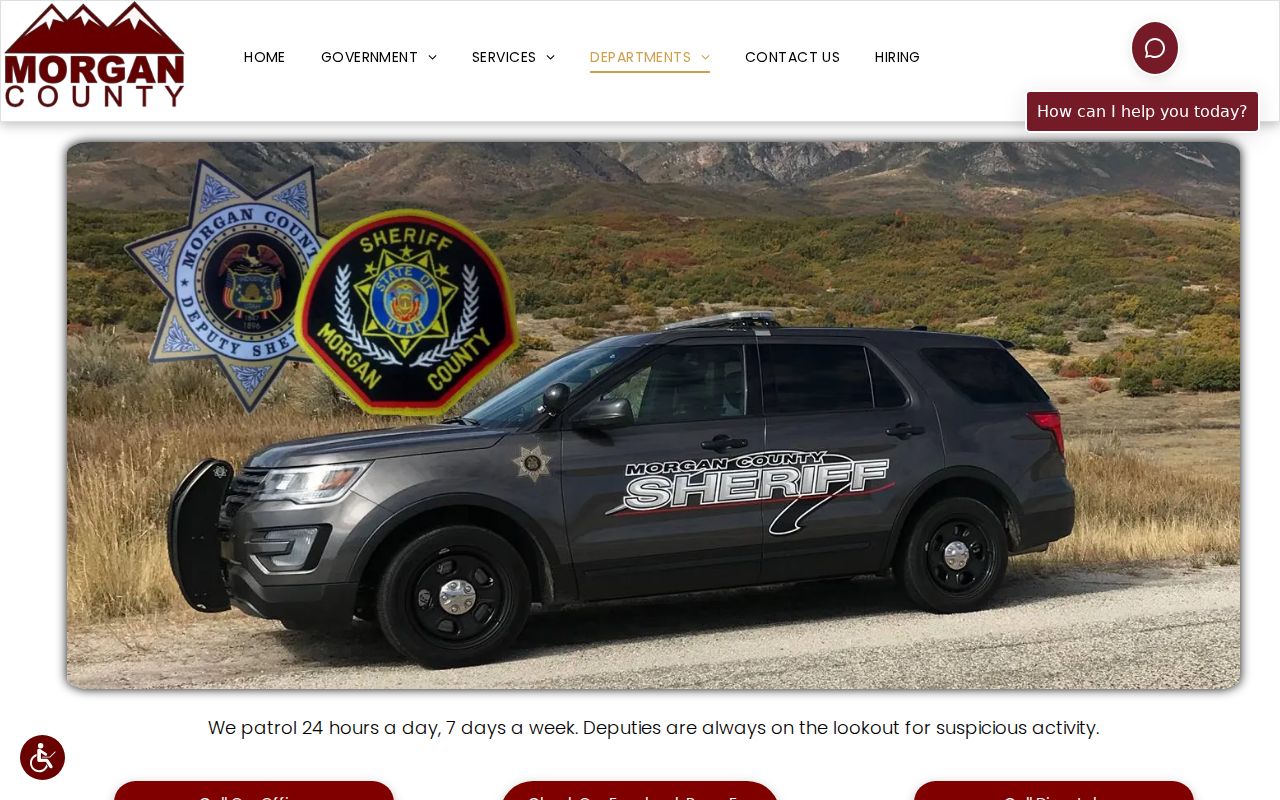
Sheriff Corey Stark’s office publishes 801-829-0590. If another agency made the arrest, such as Utah Highway Patrol Section 2, request that agency’s incident report rather than assuming the sheriff holds it.
Types of Criminal Records
A Morgan County criminal record is not one document. Each office records its part of the event, and each part has its own access rules. The officer’s report states the facts and legal basis alleged at arrest. The receiving jail logs identity, custody, booking charges, and release information. The prosecutor may file a different charge or decline the matter. Court staff then record pleas, motions, judgments, and sentences.
- Incident and arrest reports: held by the sheriff, UHP, or other investigating agency.
- Booking and custody files: held by the out-of-county receiving jail after a Morgan arrest.
- Criminal court cases: maintained by District or Justice Court and indexed in Xchange when public.
- State criminal history: compiled by BCI from fingerprint-supported Utah events for subject access.
- Corrections and registry data: maintained by UDC for current custody, supervision, and registration.
A warrant is another distinct record. Morgan County has no public active-warrant list, and Xchange is not a real-time warrant confirmation tool. Confirm a possible warrant with the issuing court or sheriff.
Morgan County Court Record Search
Utah Courts Xchange is the practical public case index for Morgan County. It includes public District and Justice Court data entered through CORIS. Juvenile cases, expunged files, and records classified as private or protected do not appear. Older converted justice-court material can also be less complete, so a missing online result may justify a courthouse terminal search or direct court request.
The Morgan Justice Court page gives the local calendar and counter rules.
Court is generally held Tuesday at 4 p.m., with listed exceptions. Parties must call to be put on the calendar. A citation recipient has 14 consecutive days to contact the court, pay, or schedule. These operating rules matter because looking up a case does not itself schedule an appearance or resolve a citation.
| Field or control | Type | Use and current access note |
|---|---|---|
| Account Type | Radio choice | Select one-time use or monthly subscription. |
| Continue as Guest | Session choice | Creates a 24-hour route; unused credit is lost and idle sessions end. |
| Email and Username | Account text | Used for account contact and login. |
| Party Name | Search text | Use spelling variants and confirm the Morgan court and case. |
| Case Number | Search text | The best exact identifier when available. |
| Search | Button | Each click counts under the live price rule. Guest access starts with $10 credit; documents cost $1. |
Monthly access has a $25 setup charge and costs $40 per month, including 500 searches. Paper copies are $0.25 per sheet. Live sources have recently differed on the per-search amount, so confirm the registration screen before funding an account.
What a Morgan County Criminal Record Shows
The visible fields depend on the source. A court summary may show a party name, case number, venue, judge, charge statute, offense level, filing date, docket events, plea, disposition, and sentence. An arrest report adds the officer’s narrative and incident details. A booking file adds intake and custody facts. UDC may show present status, housing, supervision, offenses, and sentence length for people within its system.
| Name and Identifiers | Names, aliases, date of birth, and limited traits used to distinguish records; sensitive numbers are restricted. |
|---|---|
| Arrest and Booking | Date, location, agency, alleged offense, booking facility, custody status, and release details when public. |
| Charges and Statutes | Each filed count, Utah code citation, offense level, and later amendments. |
| Disposition | Dismissal, acquittal, guilty plea, trial conviction, or another charge-level outcome. |
| Sentence | Jail or prison range, fines, restitution, probation, and other court orders. |
| Custody or Supervision | Current UDC inmate, probation, or parole status when the person falls within that system. |
Read every charge separately. One Morgan case can contain both dismissed and convicted counts. “Closed” describes the case status, not the result, and a booking charge can differ from the prosecutor’s filed charge.
Morgan County Warrant Record Checks
No official Morgan County active-warrant search or app was found. Utah law generally treats an issued arrest warrant as public unless a court restricts it for good cause, but an unserved warrant can include protected operational material. A docket entry in Xchange can provide context, yet it should never be treated as live confirmation that a warrant remains active.
For your own possible justice-court warrant, call 801-845-4021 and ask for the case number, warrant type, bond, and appearance instructions. District matters must go to the Second District clerk. Payment alone may not clear a warrant until the court enters an order and law-enforcement systems receive it. Ask when that transmission occurred.
Warrant safety: Follow the issuing court’s directions before appearing in person. A third-party result cannot confirm current warrant status or recall.
Sealed warrants, juvenile warrants, and investigative search warrants are not ordinary public lookup material. A focused GRAMA request can seek a sheriff-held record, while the court remains the source for its own warrant and case file.
Public Access Laws
The Utah Government Records Access and Management Act starts with a public-record presumption, but it also recognizes private, controlled, and protected records. Court files follow the Utah Code of Judicial Administration. The right office must review each requested item, which is why active investigative details, juvenile information, victim identifiers, medical data, and sealed material may be withheld even when other parts of the same event are public.
Key Utah access rules:
Utah Code §63G-2-201 states the public-record presumption and generally allows free inspection.
Utah Code §63G-2-202 gives a record subject and certain authorized representatives access to qualifying private records.
Utah Code §63G-2-301 identifies public records that include many issued arrest warrants.
Court Rule 4-202.02 classifies public, private, and protected judicial records.
Utah Code §77-40a-403 limits disclosure after expungement.
A denial should identify the classification and appeal rights. Public access never authorizes harassment, threats, stalking, false representation, or misuse of protected data.
Morgan County Corrections Record Search
UDC Offender Search covers current Utah prisoners and people on probation or parole. It expressly does not cover unsentenced county-jail detainees. Morgan County’s probation and parole supervision is state-run through Adult Probation and Parole Region 2 in Ogden. That office serves Morgan and Weber Counties from 2540 Washington Boulevard, fifth floor, and publishes 801-626-3700.
The UDC Offender Search page shows its name and offender-number routes.
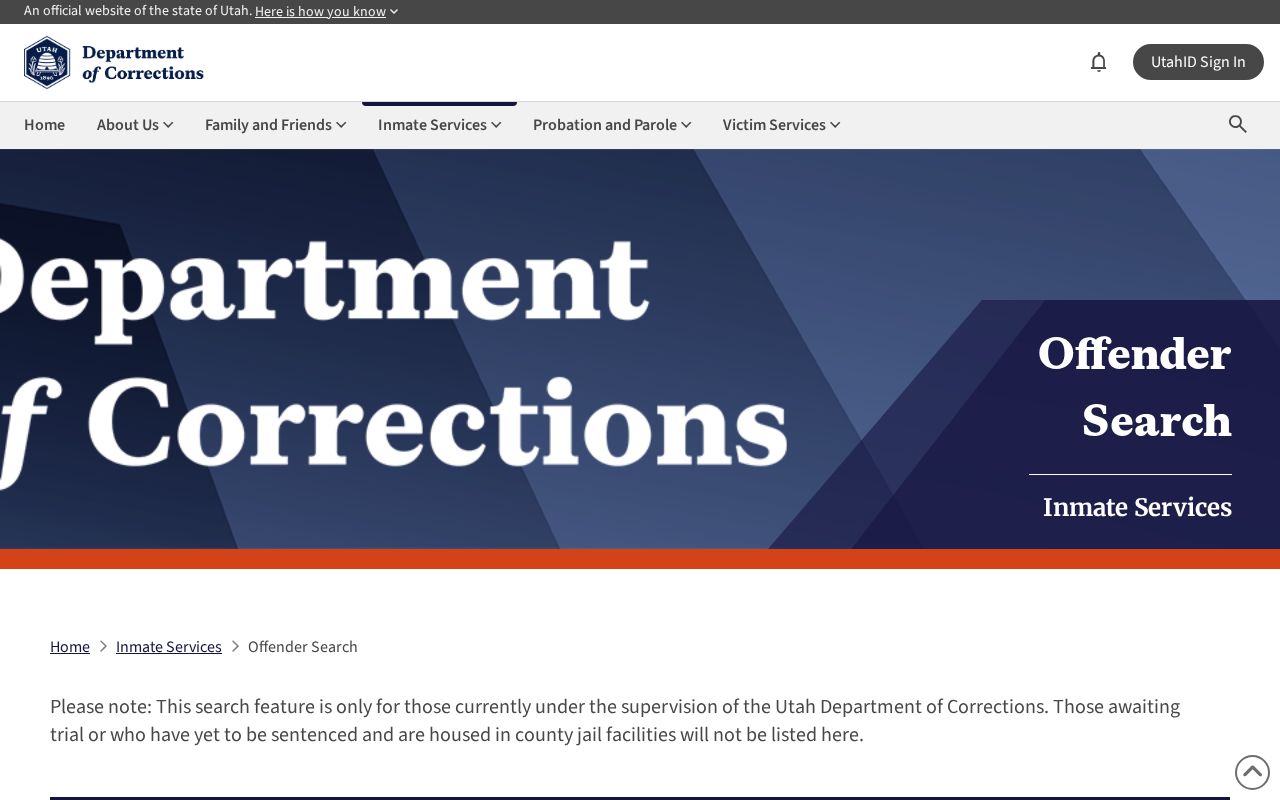
The name route requires at least one letter in both the first and last name fields, with an optional middle name. The alternative is a UDC offender number. A public result can show legal status, offender number, location, offenses, sentence length, Board hearing date, and parole or expiration date.
| Record route | Who it covers | What it does not replace |
|---|---|---|
| Receiving jail | Fresh Morgan arrest booked outside the county | The filed court case |
| UDC Offender Search | Current inmates, probationers, and parolees | A pretrial jail roster |
| Utah VINE | Custody notifications, including releases and transfers | A full criminal history |
Sealed, Expunged & Restricted
Utah’s petition expungement route starts with BCI, not at the Morgan court counter. An adult applicant submits the current application, fingerprints, identification, and a $65 application fee. BCI reviews the full history, including other states and past relief. Its published review period is one to two months and cannot be expedited. If eligible, certain conviction or plea-in-abeyance certificates cost another $65 each, while dismissal, acquittal, and declination certificates have no certificate fee.
After BCI issues a certificate, the person petitions the court of judgment. The certificate is not an expungement order. Notice, an objection, and a hearing may follow. Once the judge signs an order, certified copies must reach the listed agencies. BCI then removes the charge from the ordinary Utah history display, keeps it in a protected file, and notifies the FBI. Xchange no longer displays the case.
Clean Slate relief is a separate automatic route for limited case types. Traffic-only requests follow a court route rather than the standard BCI certificate process. Utah’s implementation changed during the 2024 to 2026 pause, so applicants should check the current court and BCI pages instead of relying on an old checklist.
- Expungement
- Utah’s process for sealing or otherwise restricting qualifying arrest, investigation, detention, and conviction records.
- Disposition
- The result for one filed charge, such as conviction, dismissal, or acquittal.
- Plea in abeyance
- A plea held while court conditions are completed, with the later result controlled by the order and law.
- Protected record
- A record withheld from ordinary public access under a statute or court rule.
Morgan County Records Span Regions
Morgan is Utah’s only incorporated city in the county and serves as the county seat. The county’s small population and mountain geography help explain why specialized justice services are regional. District court administration spans Davis, Morgan, and Weber. Juvenile court service is in Ogden. AP&P Region 2 also works from Ogden, while BCI’s public counter is in Taylorsville. Detention takes place outside Morgan County.
The Census Bureau Morgan County profile supplies the county’s current population and geography context.
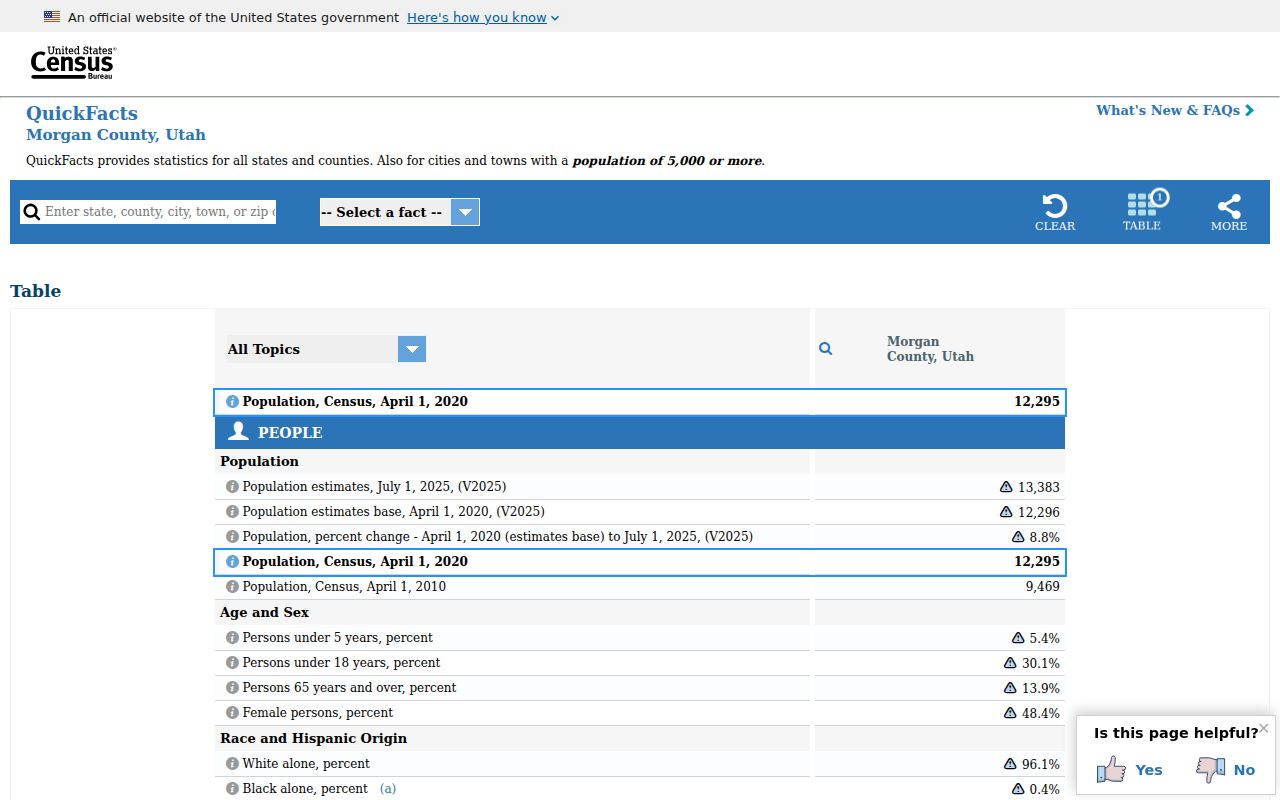
The county’s 2025 estimate is 13,383 people, and its area is about 609 square miles. Those figures do not measure crime. They show why one Morgan incident can create records in several places: a local report, an out-of-county booking, a statewide court entry, and perhaps a BCI or UDC record.
Criminal Records by City in Morgan County
Morgan is the county’s only incorporated city, so no second or third city page is manufactured from an unincorporated place. City residents use the Morgan County Sheriff rather than a separate published municipal police records unit. Lower-level cases go to Morgan County Justice Court, and the more serious adult cases go to District Court. Recent custody still must be traced to the receiving jail.
Morgan Criminal History
2020 population 4,968 · County sheriff and justice-court channels serve the city.
The city record page focuses on the local Tuesday court calendar, citation deadline, courtroom rules, and the city’s no-jail booking trail.
Morgan County Criminal Record Flow
A record search becomes more accurate when each stage is checked in order. The officer first writes the incident or arrest report. An out-of-county jail creates the booking. The county attorney decides whether and what to charge. Court staff enter the public case and final disposition. Fingerprint-supported data can then reach BCI, while a prison, probation, or parole status belongs in UDC.
Record flow: Morgan arresting agency › receiving jail › county attorney › District or Justice Court › BCI disposition matching.
This flow explains common mismatches. “Booked for” states an intake allegation, not the final charge. A case can be absent from BCI if fingerprints were never matched, even though the court still has it. A dismissal ends a charge but does not erase every agency copy. The Morgan County arrest history route covers the receiving-jail steps, while the court page follows filed charges and outcomes.
Use the originating office to correct an error. Court staff address docket data, the arresting agency addresses its report, the receiving jail addresses booking fields, and BCI offers a record-challenge process for a person’s Utah history.